Getting a tin item clean doesn’t have to be hard, and you can bring back its shine with simple items from your home. While tin might look tough, it can be damaged easily if you’re not careful with it. According to Bob Ellis, Collections Manager at the Henry Ford Museum, “The key to cleaning tin is using the mildest possible method first—often just warm water and mild soap will do the job.”
Some of the links in this article may be affiliate links. If you make a purchase through these links, we may earn a small commission at no extra cost to you. Thank you.
Before starting any cleaning, check if your tin piece actually needs cleaning, since some old tins look better with their natural age marks. If you decide to clean it, start with the gentlest method: warm water mixed with a small amount of dish soap. Avoid using harsh cleaners or scrubbing too hard, as this can scratch or damage the tin’s surface.
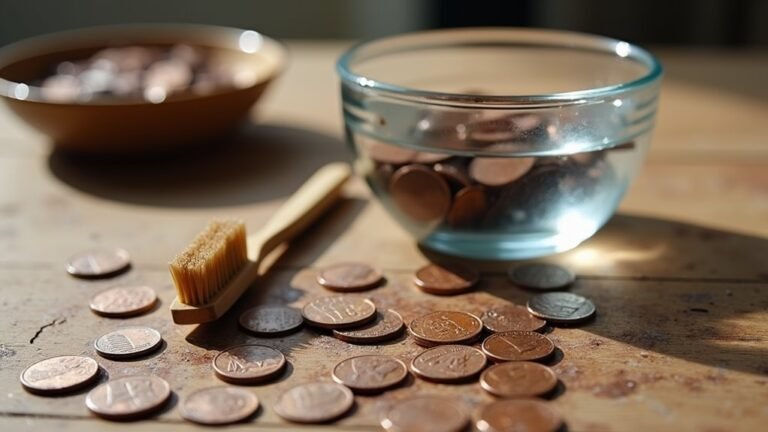
For tougher dirt and grime, you can make a paste using baking soda and water. Spread this paste gently on the tin, wait a few minutes, then wipe it off with a soft cloth. Once clean, dry your tin piece right away with a soft cloth to prevent water spots or rust.
Remember to store your clean tin items in a dry place, away from extreme heat or cold, to keep them looking their best for years to come.
Ancient Tin Sparkles Easily
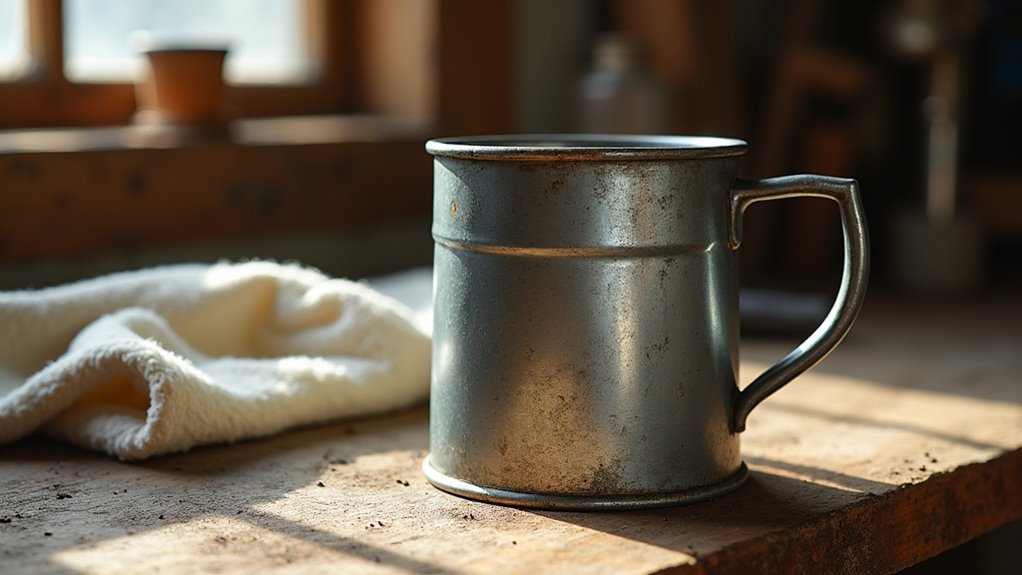
The gentle glow of ancient tin has always fascinated collectors and historians alike. What’s remarkable is how easily these treasures can sparkle again with minimal effort. We’ve found that a soft sponge and mild kitchen soap works wonders on these historical pieces. I think what makes ancient tin special is its resistance to permanent tarnish. A quick polish with baking soda, perhaps, and that Heian-period luster returns almost instantly. Additionally, it’s essential to avoid harsh chemicals that can damage the surface during cleaning.
##
We’ve found YouTube to be incredibly helpful when tackling those stubborn tin-cleaning projects at home. The visual demonstrations show exactly how to create effective cleaning pastes from household items like baking soda and vinegar, while helping us avoid common mistakes that might damage our precious tin surfaces. Perhaps the best part is seeing real results before trying methods ourselves, especially when creators test products like Rub n Buff that can restore that beautiful shine to our vintage tin collections. Additionally, it’s crucial to remember that using mild soap and soft materials can prevent scratches and preserve the finish of your tin items.
Things to Do When Cleaning tin
Properly cleaning tin items requires gentle handling and appropriate cleaning agents to maintain their appearance and integrity.
The soft, malleable nature of tin makes it susceptible to scratches and damage from harsh cleaning methods, while its relatively low melting point necessitates avoiding high temperatures during the cleaning process.
- Use soft sponges or cloths – Apply gentle pressure with soft materials to avoid scratching the tin surface while cleaning.
- Select mild detergents – Choose gentle dish soaps or specialized tin cleaners that won’t corrode or damage the metal’s finish.
- Apply baking soda paste – Create a paste with water for polishing dull tin surfaces, working it in with circular motions to restore shine.
- Test cleaning solutions first – Try any cleaning method on a small, hidden area before applying it to the entire tin item.
- Hand dry immediately – After washing, thoroughly dry tin items with a soft towel to prevent water spots and oxidation.
- Polish with gentle circular motions – When applying any cleaning agent, use light, circular movements rather than aggressive scrubbing.
- Rinse thoroughly – Make sure all cleaning agents are completely removed to prevent residue that might cause discoloration over time.
Things to Avoid When Cleaning tin
When maintaining the beauty and longevity of your tin items, proper cleaning methods are essential, but equally important is knowing what practices to avoid.
Improper cleaning techniques can permanently damage tin’s delicate surface, compromise its structural integrity, or accelerate deterioration.
Understanding these limitations will help preserve your tinware’s appearance and functionality for years to come.
- Hard brushes: These can create scratches on tin’s soft surface, removing protective layers and creating permanent damage that can’t be repaired.
- Dishwashers: The high temperatures and harsh detergents in dishwashers can cause tin to warp or even melt, as tin has a relatively low melting point of approximately 232°C (449°F).
- Abrasive cleaners: Products containing harsh chemicals or abrasives, including steel wool, can strip away tin’s protective coating, leaving it vulnerable to rapid tarnishing and corrosion.
- Prolonged acidic soaks: Extended exposure to acidic cleaning solutions can react with the tin surface, resulting in discoloration, pitting, or etching that permanently alters the appearance.
- High-heat drying methods: Using heat sources like dryers immediately after cleaning can create thermal stress on the metal, potentially causing warping, cracking, or separation in tin items with multiple components.
Steps
Cleaning tin requires gentle techniques to preserve the metal’s soft surface while effectively removing dirt and tarnish.
With proper care, your tin items can maintain their luster for years without suffering scratches or warping.
The following steps outline a thorough approach to cleaning tin items safely and effectively.
Step 1: Prepare your cleaning area with a soft sponge, mild dish soap, and warm water.
Step 2: Gently wash the tin surface using the soapy water and soft sponge, avoiding abrasive scrubbing.
Step 3: Rinse thoroughly with clean, cold water to remove all soap residue.
Step 4: For light tarnish, create a paste with baking soda and a small amount of water.
Step 5: Apply the baking soda paste with a soft cloth using gentle circular motions.
Step 6: Rinse the tin item again with cold water and dry immediately with a soft towel.
Step 7: For stubborn tarnish, mix equal parts vinegar and salt to create a cleaning paste.
Step 8: Apply the vinegar-salt paste to affected areas only, gently rubbing with a soft cloth.
Step 9: Rinse thoroughly with cold water to remove all cleaning solution.
Step 10: Hand dry the tin completely to prevent water spots and potential oxidation.
Final Thoughts
Maintaining the beauty and functionality of tin requires dedication, but we’ve found the results are well worth the effort.
With proper care using gentle cleaners and avoiding dishwashers, your tinware can truly last a lifetime.
Remember to test any new cleaning method on a small area first. We think home remedies like lemon juice and baking soda offer the perfect balance between effectiveness and preserving that special luster we all love.
##
Cleaning tarnished tin doesn’t have to be a frustrating experience.
Whether you’re dealing with a cherished punched tin mirror frame or vintage tin decor, you now have several effective options at your disposal.
Start with the gentlest method first—Blue Dawn dish soap and water on a microfiber cloth—before progressing to stronger solutions like vinegar and salt paste for stubborn oxidation.
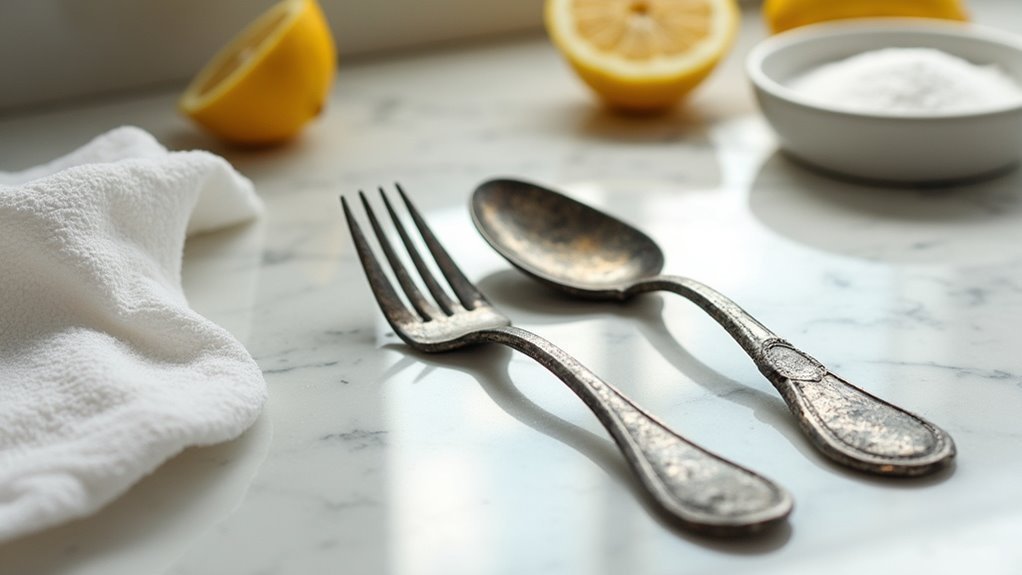
For delicate tin pieces, the lemon juice and baking soda mixture offers a softer touch that protects while it cleans.
Remember that prevention is key to maintaining tin’s beauty.
Once cleaned, regular dusting and occasional gentle cleaning will keep your tin items looking their best for years to come.
Always test any new cleaning method on an inconspicuous area first, particularly with products like Rub n Buff wax, to guarantee compatibility with your specific tin finish.
Don’t let tarnish discourage you from displaying your tin treasures.
With these simple, household-friendly cleaning techniques, you can restore the charm and character of your tin pieces and enjoy their unique beauty once again. Additionally, using gentle cleaning methods can help restore jewelry’s natural shine without causing damage.