Swimming pools should be fun places to cool off, but a green, algae-filled pool is nobody’s idea of a good time. Most of us know the feeling – you’re ready to jump in for a swim, but instead of clear water, you find something that looks more like a pond. It’s annoying, especially if you’re planning to have friends over. But don’t worry – fixing a green pool isn’t as hard as it seems, and you can get your pool back to looking clean and clear.
Some of the links in this article may be affiliate links. If you make a purchase through these links, we may earn a small commission at no extra cost to you. Thank you.
According to Thomas Lachocki, CEO of the National Swimming Pool Foundation, “The most common reason pools turn green is a lack of proper sanitizer levels combined with warm temperatures, which allows algae to grow rapidly.”
Algae Invasion Solutions
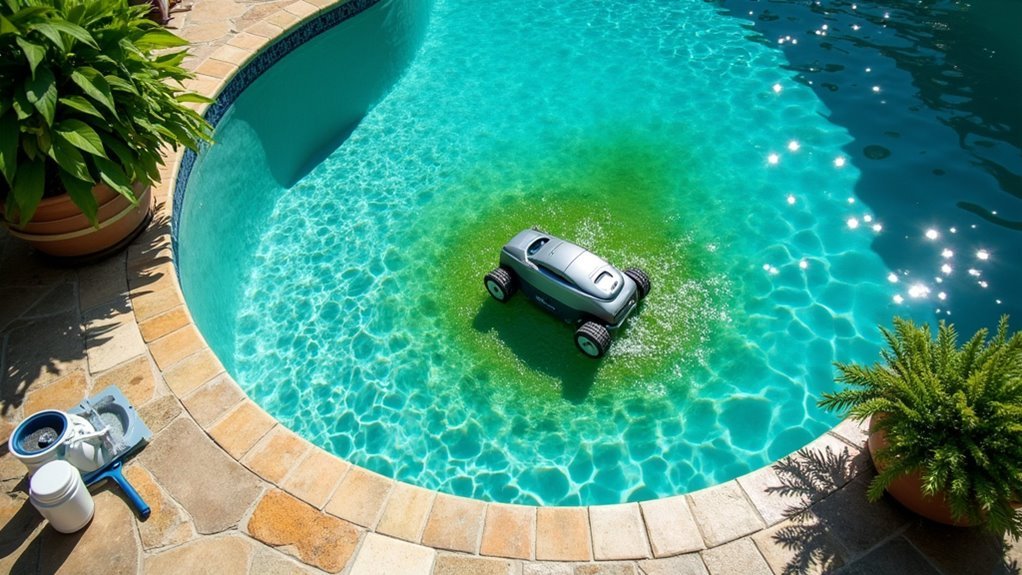
Why does battling a green pool feel so intimidating? Perhaps it’s because we’re not sure where to start. But trust me, it’s actually quite manageable.
First, brush and vacuum thoroughly, then adjust alkalinity (80-120 PPM) and pH (7.2-7.8).
Next, apply a double or triple shock treatment to raise chlorine levels. It’s essential to test water chemistry regularly to ensure levels remain balanced and prevent future algae growth.
We recommend using the SLAM process—it’s under $150 compared to professional services costing $700+.
##
Looking at YouTube tutorials on green pool cleaning, we’ve found that shocking methods often take longer than claimed, sometimes requiring days instead of hours for full clarity.
We need to understand both effective approaches (like maintaining proper chlorine-to-CYA ratios) and practices to avoid (such as relying solely on flocculation, which many videos show produces inconsistent results).
Perhaps the most valuable takeaway from these tutorials is that proper testing and maintenance can save us hundreds compared to professional services, while shortcuts almost always lead to extended treatment times and frustration.
Things to Do When Cleaning A green pool
Cleaning a green pool requires a systematic approach to effectively eliminate algae and restore crystal-clear water.
The process involves multiple steps that work together to kill algae, remove debris, and rebalance the pool chemistry.
Ultimately, this transforms murky green water into a sparkling clean swimming environment.
- Brush and vacuum thoroughly – Scrub all pool surfaces with appropriate brushes for your pool type to dislodge clinging algae from walls, steps, and floor.
- Balance water chemistry – Test and adjust alkalinity to 80-120 PPM and pH to 7.2-7.8 before treatment to guarantee chemicals work effectively.
- Apply algaecide – Add the recommended amount based on pool volume to help break down algae cells.
- Shock treatment – Use double or triple the normal chlorine amount (about 2 pounds per 15,000 gallons) after applying algaecide to kill the algae.
- Continuous filtration – Run the pool filter for 24 hours straight, using the main drain if possible, to capture dead algae particles.
- Backwash as needed – Clean the filter when pressure rises to maintain efficient filtration during the cleaning process.
- Repeat the process – Continue brushing, shocking and filtering until water clarity is fully restored, which typically takes 4-5 days for severe cases.
Things to Avoid When Cleaning A green pool
When tackling a green pool, understanding what not to do is just as important as knowing the correct steps.
Improper handling of chemicals or equipment can lead to safety hazards, damage to your pool system, or ineffective treatment that prolongs the problem.
Avoiding these common mistakes will help guarantee your pool returns to a crystal-clear condition safely and efficiently.
- Never pre-mix GREEN to CLEAN with chlorine – This combination creates a dangerous chemical reaction that can release harmful gases and pose serious safety risks.
- Avoid adding GREEN to CLEAN to buckets or pails – Improper mixing in confined containers can concentrate chemicals and cause unexpected reactions.
- Don’t vacuum immediately after treatment – Allow GREEN to CLEAN product to settle completely so you don’t redistribute algae or chemicals throughout the pool.
- Never add GREEN to CLEAN directly to skimmer baskets or filter lines – These areas often contain chlorine residue, which could trigger hazardous chemical reactions.
- Skip using flocculent for algae problems – Flocculants are ineffective against organic matter like algae, can damage your filtration system, and ultimately lead to recurring problems and unnecessary expenses.
Steps
Cleaning a green pool requires thorough attention to both physical cleaning and chemical treatment.
When algae takes over your pool, turning it into an uninviting green color, you need to follow a systematic approach to restore crystal clear water.
The process involves multiple steps that may need to be repeated over several days until the desired results are achieved.
Step 1: Brush all pool surfaces thoroughly, including walls, floor, and steps, using appropriate brushes for your pool type (nylon for vinyl or fiberglass, stainless steel for concrete).
Step 2: Vacuum the pool to remove loose debris and algae that was brushed off the surfaces.
Step 3: Test the water chemistry and adjust alkalinity to 80-120 PPM before addressing pH levels.
Step 4: Balance the pH to between 7.2-7.8 to make sure shock treatment will work effectively.
Step 5: Apply a double or triple shock treatment based on how green the pool is, following manufacturer’s instructions.
Step 6: Run the filter system continuously for 24 hours, using the main drain if possible, to circulate all the treated water.
Step 7: Retest chemical levels and adjust as needed to maintain proper balance.
Step 8: Brush and vacuum the pool again to remove any dead algae.
Step 9: Repeat the entire process if necessary until water completely clears, which typically takes 4-5 days for severely green pools.
Final Thoughts
Pool restoration doesn’t have to be a nightmare or a budget-breaker.
We’ve found that DIY methods like the SLAM process can save you hundreds compared to professional services, while actually delivering better results in just a few days.
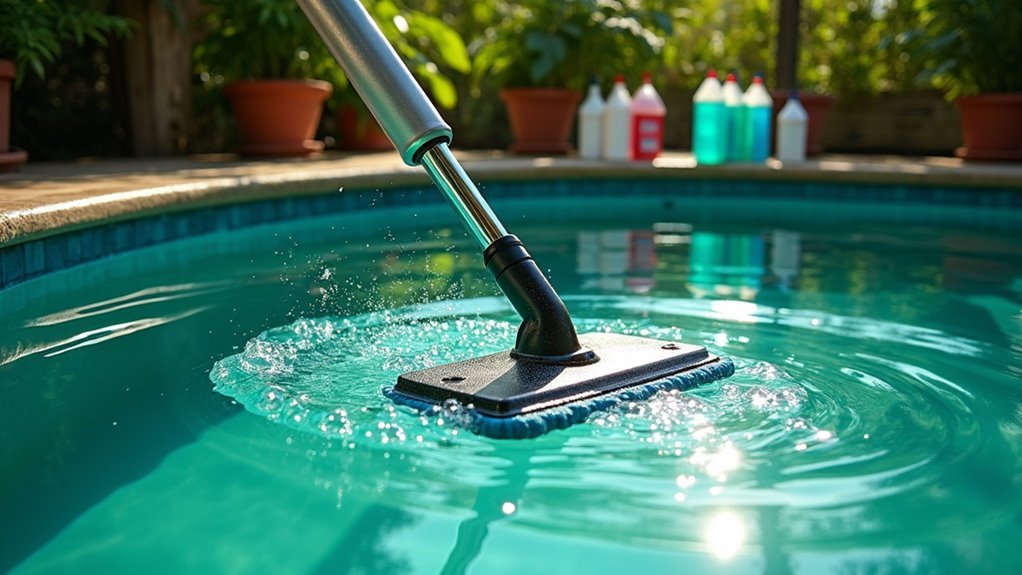
Tackling a green pool doesn’t have to be overwhelming or expensive. By avoiding common mistakes like relying on flocculation for algae removal or randomly dumping chemicals, you’ll save time, money, and frustration. The SLAM method—consistently maintaining chlorine at 40% of your CYA level—has proven to be the most reliable approach for most pool owners, typically costing less than $150 in chlorine.
Remember that proper testing is your greatest ally in this process. Invest in a quality test kit and trust the numbers rather than visual cues alone. Patience is also essential—a properly executed cleaning strategy may take several days, but rushing the process often leads to recurring problems.
Whether you’re dealing with a slightly cloudy pool or one that resembles pea soup, the same scientific principles apply. Following a systematic approach to maintain clean spa waters outlined in this guide, monitor your chemical levels carefully, and you’ll be swimming in crystal clear water before you know it. Your pool can absolutely be restored to its pristine condition—now it’s time to roll up your sleeves and make it happen!