
Last winter, we had a scary chimney fire that could have been stopped if we knew how to clean our wood stove properly. Many people wait too long to clean their chimneys, but keeping them clean is important to stay safe and make sure your stove works well. According to the Chimney Safety Institute of America, “A clean chimney can help prevent fires and carbon monoxide poisoning.” We’ll show you how to clean your wood stove step by step, starting with letting it cool down completely and using the right cleaning tools. Don’t worry – once you learn how to do it, it’s much easier than you might think.
Some of the links in this article may be affiliate links. If you make a purchase through these links, we may earn a small commission at no extra cost to you. Thank you.
Ashes to Clean Stoves
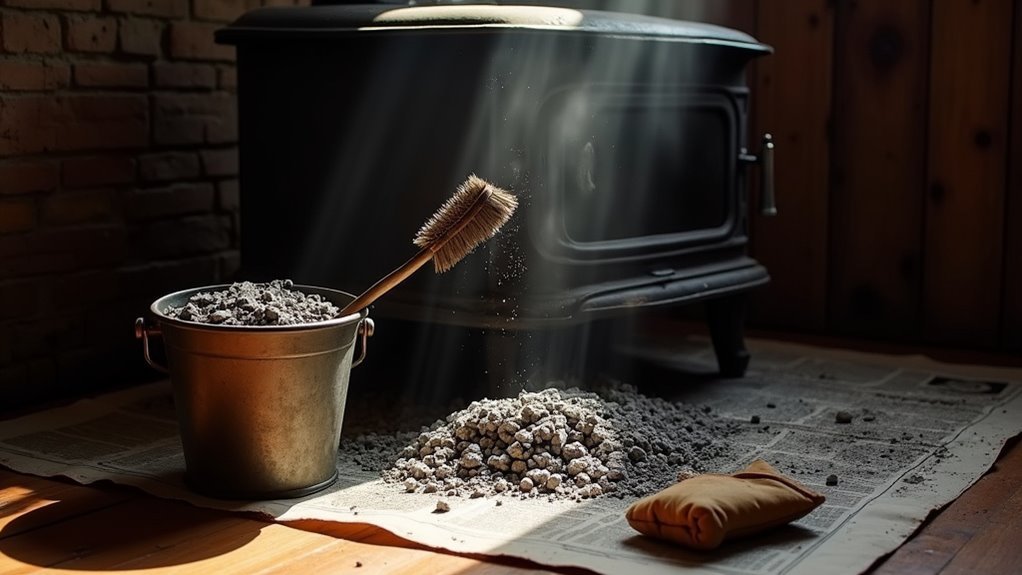
Scooping out the ashes from your wood stove might seem like a mundane first step, but it’s actually essential for effective cleaning. We always recommend wearing protective gloves and a dust mask during this process—those fine ash particles aren’t something you want in your lungs!
Use a shovel to carefully remove all ash debris, then transfer it to a metal container. This precaution prevents any hidden hot embers from causing trouble later. Additionally, regular cleaning ensures safety and longevity of your chimney.
##
Let’s wrap up our wood stove cleaning guide with some essential pointers.
We’ve covered the critical steps like using wire brushes and managing debris, but there are definitely things to avoid too, such as cleaning while the stove is still warm or using water on cast iron parts. Regular inspections for cracks or damage are also important to ensure safe operation and prevent issues.
I think the most important takeaway is that regular maintenance prevents dangerous chimney fires, so set a cleaning schedule that works for your household’s stove usage patterns.
Things to Do When Cleaning a Chimney Wood Stove
Cleaning a chimney wood stove requires thorough attention to detail and proper safety precautions to prevent house fires and secure efficient operation.
The process involves removing accumulated ash, scrubbing away creosote buildup, and inspecting for potential damage that could compromise the stove’s performance or safety.
When done correctly, regular maintenance extends the life of your wood stove while greatly reducing fire hazards that commonly result from neglected chimney systems.
- Remove ash carefully – Use a shovel to transfer cool ash from the stove into a metal container while wearing protective gloves and a dust mask to prevent inhaling harmful particles.
- Prepare the work area – Seal the fireplace opening with a damp sheet to contain soot and debris, and lay down drop cloths to protect surrounding surfaces.
- Use proper chimney cleaning tools – Insert a wire chimney brush that matches your flue size and attach extension rods to reach the entire chimney length.
- Clean with thorough brushing technique – Perform multiple twisting motions as you work the brush up and down the chimney to dislodge creosote buildup from all surfaces.
- Wear complete protective gear – Don safety glasses, gloves, and a respiratory mask to protect yourself from soot, dust, and debris during the cleaning process.
- Vacuum debris thoroughly – Use a shop vacuum to clean up fallen soot and creosote from the hearth, smoke shelf, and surrounding areas.
- Conduct a post-cleaning inspection – Check for cracks, rust, or other damage in the stove body and chimney structure that might require professional repair.
- Test for proper draft – After cleaning, verify that smoke properly draws up the chimney before regular use resumes.
Things to Avoid When Cleaning a Chimney Wood Stove
Proper maintenance of your chimney wood stove is essential for safety and efficiency, but certain practices can cause serious damage to your heating system and even create fire hazards in your home.
Regular cleaning helps prevent dangerous creosote buildup, but using improper techniques or materials can compromise the structural integrity of your chimney and potentially lead to costly repairs or unsafe conditions.
- Water for cooling chimney fires – Using water to extinguish or cool hot chimney fires can cause thermal shock, cracking tile liners and warping metal components, which compromises the chimney’s structural integrity.
- Disturbing loose mortar or components – Avoid dislodging loose materials or devices during cleaning as this can destabilize the chimney structure and increase collapse risk.
- Oversized or heavy brushes – Brushes exceeding 15-20 pounds can damage tile liners, creating gaps where dangerous sparks can escape into surrounding structures.
- Chain swinging techniques – Using heavy chains or tire chains for cleaning can damage flue linings while providing inconsistent cleaning results.
- Chemical cleaners containing sodium chloride – These corrosive substances can damage metal chimney components and may cause dangerous explosions when exposed to extreme heat in stoves.
Steps
Regular maintenance of your chimney wood stove is essential for both safety and efficiency.
A clean chimney prevents dangerous creosote buildup, which can lead to chimney fires, and guarantees proper ventilation of smoke and gases.
By following a systematic approach to cleaning your wood stove and chimney, you can extend the life of your heating system and maintain peak performance throughout the cold seasons.
Steps
Step 1: Gather all necessary tools including a chimney brush, extension rods, shop vacuum, protective gloves, dust mask, and drop cloths.
Step 2: Prepare the area by laying down drop cloths around the stove and ensuring good ventilation in the room.
Step 3: Allow the stove to completely cool before beginning any cleaning procedures.
Step 4: Remove and dispose of ash from the wood stove using a small shovel, placing it in a metal container.
Step 5: Insert the chimney brush from the bottom of the flue and use a twisting motion while pushing upward.
Step 6: Add extension rods as needed to reach the full height of the chimney.
Step 7: Repeat the brushing process several times to guarantee thorough removal of creosote buildup.
Step 8: Use a shop vacuum to remove fallen debris from inside the stove and flue.
Step 9: Inspect the interior of the stove for any damage such as cracks or excessive rust.
Step 10: Clean the stove’s interior surfaces with a wire brush or scraper if necessary.
Step 11: Have any damage professionally repaired before using the stove again.
Final Thoughts
Maintaining your chimney and wood stove properly isn’t just about following a checklist; it’s about protecting your home and loved ones.
We think the investment in professional cleaning—typically $100-$200 annually—is perhaps the best fire insurance you’ll ever buy.
##
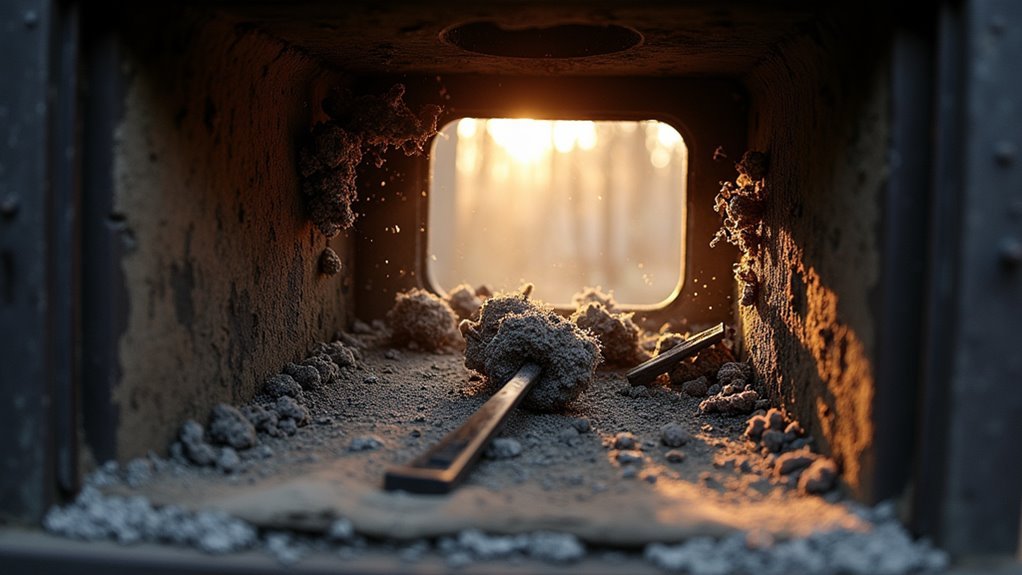
Maintaining your chimney wood stove isn’t just about cleanliness—it’s about safety and efficiency for your home.
Regular cleaning prevents dangerous creosote buildup that could lead to chimney fires, while also guaranteeing your stove operates at peak performance throughout the heating season.
Neglect your chimney, and you risk both safety and warmth—regular cleaning protects your home while maximizing your stove’s potential.
By following a consistent maintenance schedule—cleaning at least annually or after every third cord of wood—and using the proper tools and techniques, you’re taking proactive steps to protect your home and family.
Remember that proper protective gear isn’t optional; it keeps you safe during the cleaning process.
The benefits extend beyond safety.
A well-maintained wood stove burns more efficiently, provides more heat, and uses less wood—saving you money while reducing environmental impact.
The simple practice of burning only well-seasoned hardwood in hot fires with adequate airflow will greatly reduce creosote formation between cleanings.
Don’t wait for signs of trouble before taking action.
Make chimney maintenance part of your regular home care routine, and consider professional inspections if you’re uncertain about any aspect of your stove’s condition.
Your diligence today guarantees warm, worry-free evenings by the fire tomorrow.