When it comes to tackling stubborn dirt and grime outside your home, a pressure washer can be a real time-saver. In this guide, we’re taking a close look at five of the best pressure washers for 2026.
The range includes everything from lightweight cordless models that you can carry around easily to more powerful electric machines built for heavy-duty cleaning.
We’ll break down important features like power output, ease of moving the unit, the variety of nozzles included, and what kind of maintenance you can expect.
By the end, you’ll have a clearer idea which pressure washer suits the surfaces you need cleaned, fits your budget, and won’t be a hassle to store.
Cordless 990PSI Battery Handheld Pressure Washer
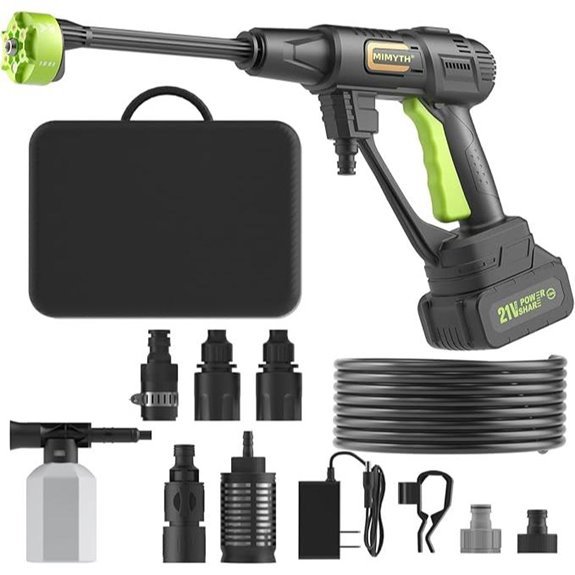
We think this model is best for homeowners who want a truly portable cleaner that still packs enough power for cars, patio furniture, and light siding—because it pairs a 775 motor delivering 990 PSI with a 21V 4.0Ah battery, so you get up to about 40 minutes of continuous cleaning without a cord or generator.
Features:
- 775 motor, 990 PSI; 21V 4.0Ah battery, 3.2 lbs, case.
- six-in-one nozzle, foam pot, 23ft hose, weighted filter, bottle/faucet connectors.
Setup:
– Quick connects, charge fully, follow manual.
We recommend it for portable, reliable cleaning. Start with foam then rinse afterwards.
Westinghouse WPX3000e Electric Pressure Washer 3000 PSI
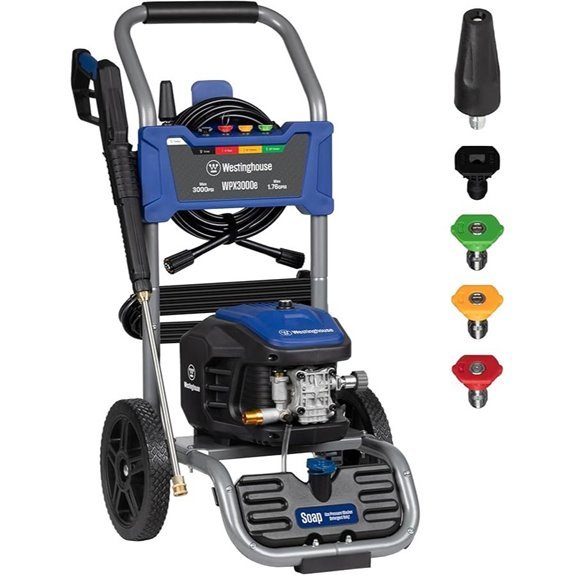
If you need an electric pressure washer that tackles heavy-duty home jobs without the hassle of gas engines, the WPX3000e is a strong choice: it delivers up to 3000 max PSI (2600 rated) and a respectable water flow, so we’d recommend it for homeowners who want deep cleaning power for decks, driveways, fences, and cars but prefer an easier, lower-maintenance setup.
Overview
36.8 lb, 120V induction motor, axial cam pump, five quick-connect nozzles, 25 ft hose, 35 ft GFCI cord, 0.45 gal soap tank.
Tips
Use 0° for stains, 25° for general cleaning; fit foam cannon, surface cleaner (M22).
Westinghouse WPX3200e Electric Pressure Washer 3200 PSI
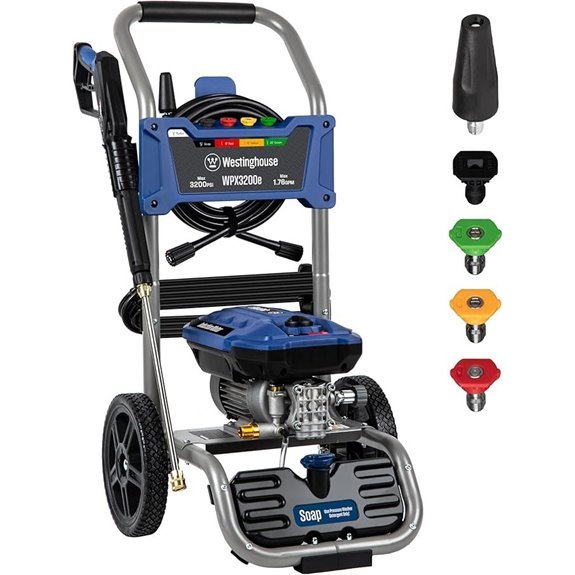
For homeowners who want near-gas power without the fuss of gas maintenance, the WPX3200e is a strong electric choice that we’d recommend for medium-to-heavy residential jobs. Features:
- 3200 max PSI, rated 2800 PSI and 1.1 GPM for decks, sidewalks, fences, cars.
- Built-in 0.61 gal soap tank, 25′ super-flex hose, 5 nozzles.
Construction:
– Steel frame, never-flat wheels, lightweight gun.
Use tips:
– Attach nozzle, prime soap tank, plug in 35′ cord, start at low pressure then increase.
Support:
– 3-year limited warranty, nationwide parts and labor assistance.
Weigh benefits, and match power to your projects. Keep maintenance simple by flushing after use regularly.
Pressure Washer with Foam Cannon and 4 Nozzles
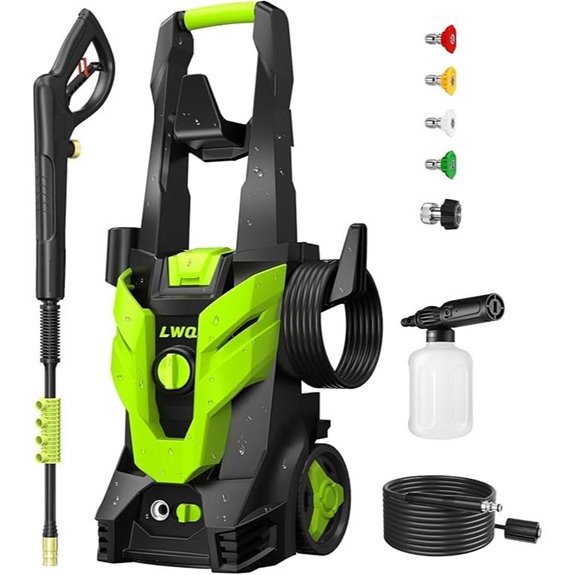
Homeowners who want a single, versatile cleaner for cars, patios, and siding will like this pressure washer, because it combines a foam cannon for chemical cleaning with four quick-connect nozzles for precise spray patterns and up to 2.5 GPM flow. Features:
- Powerful cleaning while conserving water and energy.
- Four metal nozzles (0°, 15°, 25°, 40°), cannon, detergent bottle that won’t send chemicals to pump.
- Mobile design, two rollers, antitip base, cord hook.
Our tips:
- Purge air from hoses before starting.
- Start with 40° then narrow to stronger tips.
- Draw water from faucet or bucket as needed.
Sun Joe SPX3000 Electric Pressure Washer (2500 PSI)
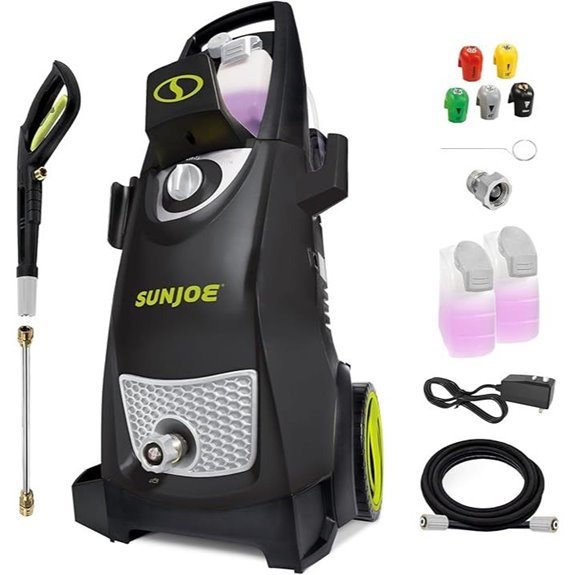
We think the SPX3000 is ideal when you want a portable but powerful electric washer that handles everything from deck and driveway grime to cars and RVs, because it delivers up to 2,500 PSI (PWMA-rated 2,030 PSI) with a lightweight, wheeled design.
Overview:
Weighing 24.3 lb, it pairs a 14.5-Amp/1800-W motor with 1.2 GPM flow, a 34″ lance, 20′ hose, five quick-connect tips and detergent tanks. GFCI power, all-metal fittings.
Usage Tips:
- Secure hoses and connections.
- Start with 40° or 25°, switch to 0° for stubborn spots.
- Use soap, then rinse.
Maintenance: engage Total Stop System, store dry indoors always.
Factors to Consider When Choosing Pressure Washers for Home Use
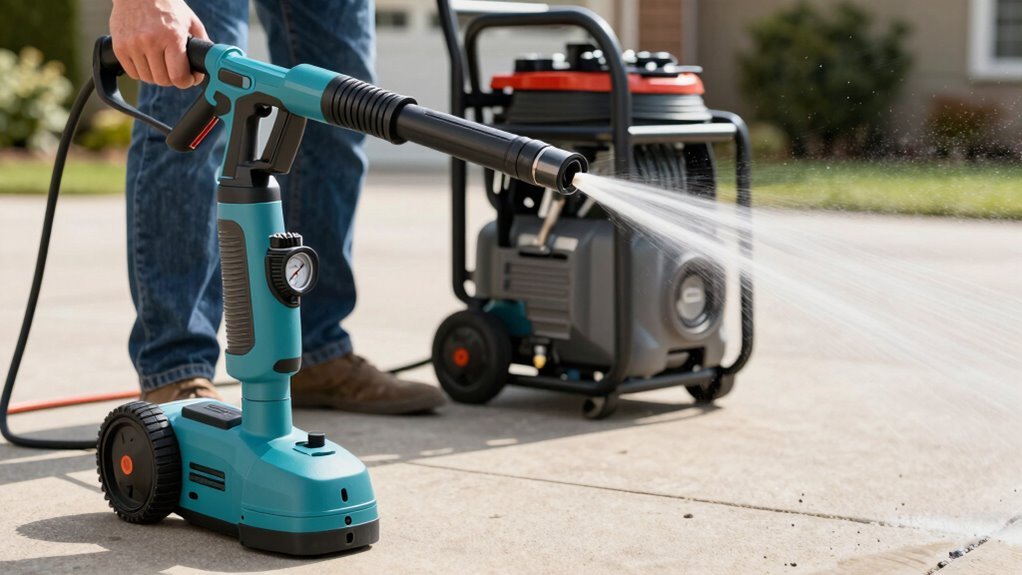
We’ll walk through the key things you should weigh when picking a home pressure washer, starting with pressure and flow, then power source and battery life or runtime. We’ll also cover portability and weight, and the nozzles and accessories that make specific jobs easier, with clear tips so you can match a model to how you plan to use it. Follow our step-by-step guidance and you’ll be able to compare models confidently, without missing any important trade-offs.
Pressure and Flow
Why do pressure (PSI) and flow (GPM) matter so much when you’re picking a pressure washer?
Pressure and Flow
We look at PSI for force, GPM for how much water moves. Higher PSI tackles tough grime; higher GPM speeds cleaning of large surfaces. Balance matters: for many homes, about 2000 PSI with 1.4 GPM works well. Too much PSI with low GPM can gouge paint or wood, so match settings to the surface.
Tips:
- Start low, increase pressure gradually, test in an inconspicuous spot.
- Use adjustable nozzles to change spray pattern and effective pressure.
- For big areas prioritize higher GPM; for stubborn stains prioritize PSI.
We recommend choosing a model that lets us adjust both. Keep manuals and safety guidelines handy.
Power Source Type
Pick the right power source and you’ll match the machine to the job, avoiding frustration with run-time, noise, or insufficient cleaning power.
Power Source Type
We should weigh electric and gas options. Electric models are lighter, quieter, and easier to maintain, great for most residential tasks. They’re plug-and-play, compact, and ideal where noise matters. Consider cord length and whether a battery-powered variant exists, to guarantee reach and mobility.
Gas models
Gas units deliver higher PSI and GPM, better for heavy-duty outdoor cleaning. They need fuel and regular maintenance, yet give true portability without outlets.
Quick tips
- Choose electric for light, low-noise jobs.
- Pick gas for power and remote work.
- Match source to task and access to outlets. We’ll help decide together.
Battery Life & Runtime
What to check:
- Ah rating: higher amp-hours usually give longer operation, pick larger Ah for big jobs.
- Fast-charge: look for rapid recharge to cut downtime.
- Backup batteries: swap in a charged pack if you need continuous work.
Tips to maximize runtime:
- Start with a full charge.
- Use lower pressure/nozzle settings for light cleaning.
- Avoid frequent charge cycles and store batteries away from extreme heat or cold.
Remember battery capacity, charging speed, and care determine how much uninterrupted cleaning you can do. Check specs to match runtime with tasks.
Portability and Weight
Portability and weight matter more than many buyers realize when we choose a pressure washer for home use. We look for models under 30 pounds for easy carrying, and point out handheld or compact units with integrated handles that fit tight storage spaces. Wheels help; choose high-profile or never-flat types for smoother movement over gravel or grass. Battery-powered models free you from cords, so you can clean far from outlets. An ergonomic layout and manageable weight reduce fatigue, especially during long sessions.
Tips:
- Test lift and roll the unit before buying.
- Check handle comfort and wheel size.
- For long jobs, plan breaks or use a cart.
These steps keep cleaning efficient and less tiring. We’ll help you pick the right balance.
Nozzles and Accessories
Because the right nozzle or attachment can make a quick job safer and far more effective, we always check what comes with a unit and what extras it can accept. Different nozzles—0°, 15°, 25°, 40°—give specific spray angles for tasks, from stubborn stains to gentle rinses. Look for quick-connect systems so you can swap tips without tools. Adjustable or multi-pattern nozzles add control when surfaces vary.
Key accessories:
- Foam cannon or detergent bottle for cleaning solutions.
- Surface cleaner for patios and big flat areas.
- Undercarriage brush for vehicle rims or hard-to-reach spots.
Tips: match nozzle angle to task, start wide then narrow if needed, and test on a small area first. Buy compatible extras, and store nozzles dry and organized regularly.
Water Supply Options
How will we feed your pressure washer for the job at hand?
Water Supply Options
We’ll choose between garden hoses, onboard reservoirs, or alternative sources. Most units attach to a standard garden hose, so you can hook to an outdoor faucet quickly. Portable models sometimes have a built-in reservoir or foam cannon, letting you work without external water. If you must draw from a bucket, pool, or river, use a longer supply hose—25 feet or more—to increase reach, and install a weighted filter basket to keep debris out of the pump. Step-by-step: connect hose securely, confirm intake fittings match, place filter basket in the source, then prime the pump per manufacturer instructions. These steps protect performance and extend use. We recommend following those steps.
Durability and Warranty
Now that we’ve covered water supply options and how to feed your washer, let’s look at how long the machine will last and what protections come with it.
Durability
We look for steel frames, high‑quality components, corrosion‑resistant hoses and nozzles, and models with maintenance‑free axial cam pumps. These features help the unit stand up to frequent use. Regularly inspect seals, hoses and fittings, replacing worn parts per the manual.
Warranty
Longer warranties, like a 3‑year limited plan, show manufacturer confidence and give you peace of mind. Read coverage details, noting what parts, labor and exclusions apply. Steps to use your warranty:
- Register promptly.
- Keep receipts and service records.
- Follow maintenance schedules in the manual.
Do these things, and your washer will serve for years.