By coincidence, our test week overlapped with a major dust storm, so we put five top robot vacuums through a real challenge. We’re comparing the Roborock Q10 S5+, Uninell UR3, Mova V50 Ultra, Tikom G8000 Max, and Mova P10 Pro. We’ll cover suction, obstacle avoidance, mopping, and self-emptying features—so you can pick the one that suits your floors and routine…
Some of the links in this article may be affiliate links. If you make a purchase through these links, we may earn a small commission at no extra cost to you. Thank you.
Roborock Q10 S5+ Robot Vacuum & Mop
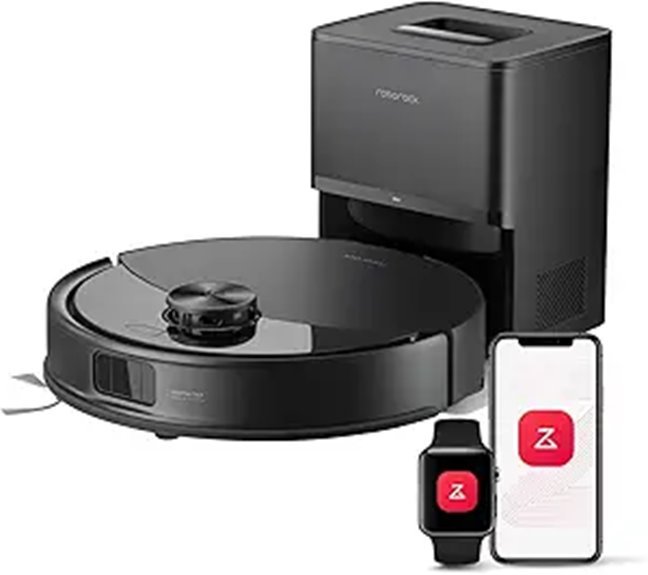
Who needs the Roborock Q10 S5+? We do if you want powerful, low-maintenance cleaning that handles pets and busy homes. It delivers 10,000 Pa suction, lifts hair and debris on carpets and hard floors, and its VibraRise 2.0 mopping scrubs up to 3,000 times per minute while lifting on carpets. PreciSense LiDAR maps precisely and ReactiveTech avoids obstacles. Dual anti-tangle features and a 2.7L self-emptying dock cut upkeep—about 70 days per bag. The app lets us schedule, set no-go zones, adjust suction and mop modes, though it supports only 2.4GHz Wi‑Fi. It’s compact, with 150-minute battery life and reliable.
Robot Vacuum and Mop Combo with Self-Emptying Station
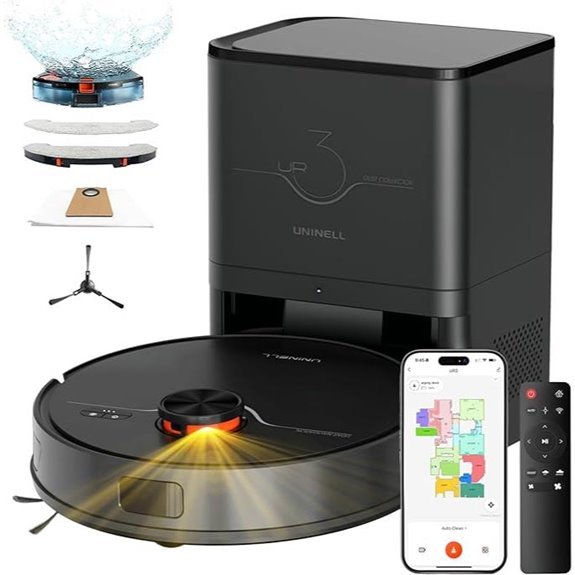
We recommend the Uninell UR3 for busy households and pet owners who want near‑hands‑off, whole‑home cleaning, since its 3.5L self‑emptying station, 5,000Pa suction, Lidar navigation and 180‑minute runtime handle multi‑floor coverage with minimal intervention. We value its adjustable 3‑level suction and water flow, auto carpet boost, tangle‑free roller and HEPA filtration for hair and allergen control. The 3.8‑inch profile reaches under furniture, while obstacle avoidance, anti‑drop sensors and 18mm climbing make navigation reliable. App, voice and remote control enable zoned schedules, no‑mop/no‑go areas and auto recharge/resume. With 70‑day maintenance, robust support and strong reviews, it’s a practical all‑in‑one choice.
Mova V50 Ultra Robot Vacuum & Mop Self-Cleaning
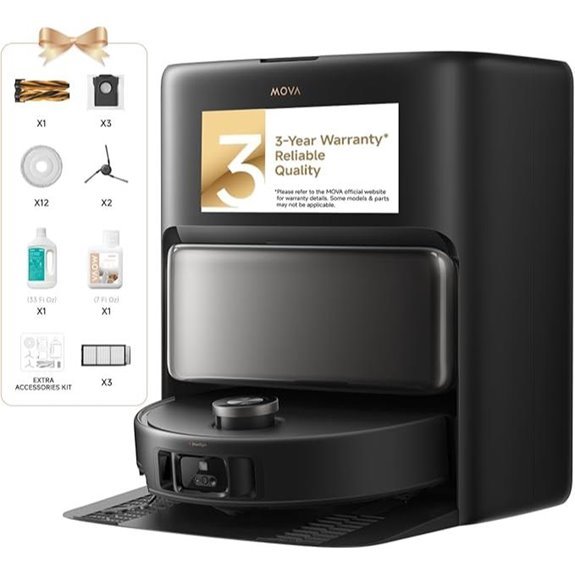
If you’ve got pets, lots of hair, and multiple thresholds, the Mova V50 Ultra is built to handle that combination with its 24,000 Pa suction, TroboWave DuoBrush anti-tangle system, and StepMaster obstacle-climbing wheels. We appreciate FlexiRise Navigation’s LDS sensor, which retracts for tight spaces and extends in open areas for precise routing. StepMaster lifts to conquer thresholds up to 2.36 inches and single steps to 1.6 inches. DuoSolution wets pads with warm water or pet-safe spray while FlexiPress evens pressure. JetSpray’s 20 nozzles distribute water; a central filter traps dirt and used water. Self-cleaning features keep maintenance easier overall.
Tikom G8000 Max Robot Vacuum and Mop
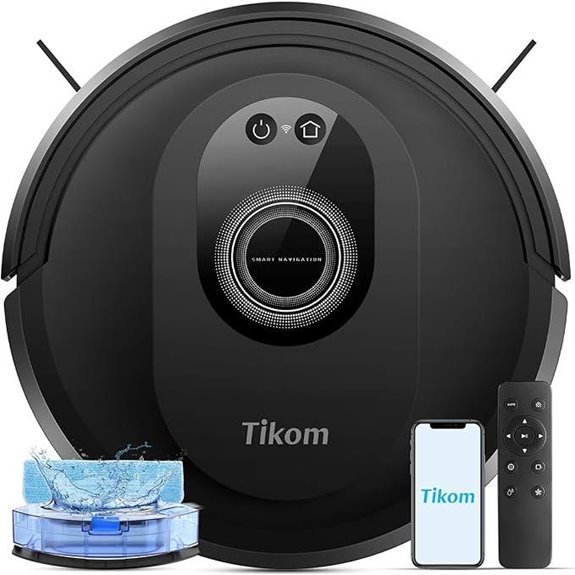
Households with pets and mixed flooring will find the Tikom G8000 Max especially appealing, since it combines 5000Pa suction with simultaneous vacuum-and-mop cleaning and a 150-minute runtime. We appreciate its 2.99-inch slim profile and smart sensors that prevent collisions and falls while reaching under furniture. A 450ml dustbin, 300ml water tank, HEPA filter and large wheels handle thresholds and varied surfaces efficiently. You can control it via app, remote, voice or buttons and choose Spot, Edge, Zig-zag or Manual modes. It auto-recharges, weighs 5.29 pounds, includes warranty support, and averages 4.4 stars from thousands of reviews and global praise.
Mova P10 Pro Robot Vacuum & Mop
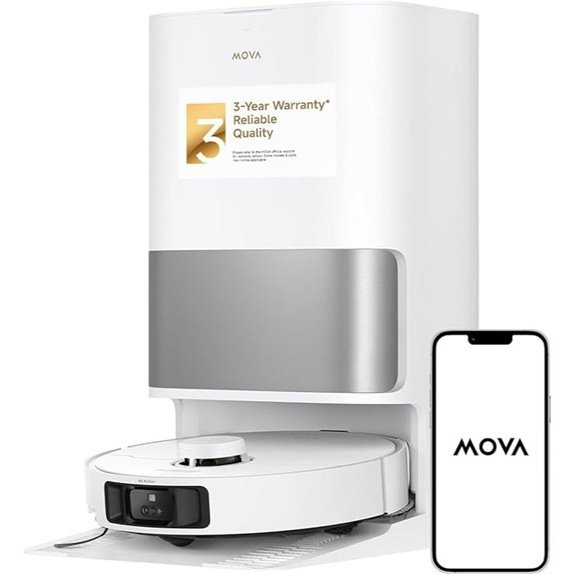
Tailored for pet owners and homes with mixed hard floors and rugs, the Mova P10 Pro stands out with 13,000Pa suction and a 10.5mm mop lift that keeps carpets dry while its auto-wash/dry base cleans mops at 149°F. We appreciate fur-focused features like pet care tips, fur collection boost, and live video interactions. Large 4.5L/4L tanks and a 3.2L auto-empty bag cover up to 4300 sq ft and 75 days of debris. 360° 3D sensing and RGB camera avoid 70+ objects, build four-level 3D maps, and work in dark. App controls, zone blocking, and a 5200mAh battery simplify cleaning.
Factors to Consider When Choosing Robot Vacuum Cleaners
We’ll cover the key factors to take into account when choosing a robot vacuum: suction power, navigation and mapping, battery life and coverage, dustbin capacity and maintenance, and mopping capability. Suction determines how well it handles carpets and pet hair, while mapping and sensors affect cleaning efficiency and obstacle avoidance. Battery life dictates how much area it can cover per charge, and easy dustbin upkeep plus effective mopping will shape your long-term satisfaction.
Suction Power
Because suction power determines how deeply a robot vacuum pulls embedded dirt and pet hair from floors, we should treat it as a primary spec when comparing models. Higher suction lets robots remove embedded dirt, pet hair, and debris across hard floors and carpets, and values are typically reported in Pascals (Pa). For deep-cleaning carpets we look for machines offering more than 10,000 Pa. Increased suction means better performance on thick carpets and heavily soiled areas, but we check for adjustable suction levels so we can optimize cleaning for different surfaces and conserve battery life. We balance power against noise and energy use, since excessively high suction raises both. Choosing a model with variable settings gives the best compromise between cleaning strength and efficiency.
Navigation and Mapping
After evaluating suction, we also need to look at how a robot finds its way around our home: effective navigation and mapping let robots build accurate floor plans and cover spaces efficiently. We prioritize Lidar-based systems for precise obstacle detection and environment scanning so robots avoid collisions and prevent falls. Multi-level mapping is essential if we have stairs or multiple floors; robots remember layouts and optimize routes per level. Advanced obstacle-avoidance sensors help vacuums steer around furniture, cords, and scattered objects without getting stuck. Smart mapping features let us set zones, create no-go areas, and define customized cleaning spots for targeted, efficient sessions. Good navigation reduces missed areas and redundant passes, saving time and improving cleanliness. We should favor reliable mapping for consistent results.
Battery Life & Coverage
One key factor we look at is battery life and how much ground a robot can cover on a single charge. Longer runtimes let robots clean larger homes without interruptions; models vary from about 50 minutes to over 180 minutes. Higher-capacity units can typically cover up to 2,000 square feet or more before recharging. We also value robots that automatically return to their dock and resume where they left off, which guarantees complete coverage across multiple rooms. Adequate battery life combined with efficient navigation reduces the risk of incomplete jobs due to power loss or frequent recharges. When comparing models, think about your floorplan, cleaning schedule and whether intermittent recharging with resume capability meets your coverage needs. We prioritize runtime that matches daily routines.
Dustbin Capacity & Maintenance
While dustbin capacity often gets overlooked, we find it directly affects how hands-on your maintenance will be and how frequently you’ll need to empty or service the robot. Larger bins reduce emptying frequency, which matters if we run daily cycles or have pets. Models with self-emptying stations commonly use 2.7L–4.5L bases that can hold several weeks’ worth of debris, cutting down interactions. We should also inspect filter and bin condition regularly: cleaning or replacing filters and washing or swapping dustbins—keeps suction strong and extends lifespan. Some units offer disposable bags versus washable bins—disposables add convenience but create waste, while washable options reduce environmental impact. Automated emptying further limits our contact with dust, improving hygiene and convenience. Pick capacity based on home size and usage.
Mopping Capability
Having sorted bin size and emptying routines, we should also evaluate a robot’s mopping capability before buying. We look for dedicated mopping systems—sonic or warm-water options—that actually scrub rather than just drag a damp cloth. Adjustable water-flow control matters so we can avoid over-wetting hardwood or leave streaks on tile. Even water distribution, via multiple spray nozzles or engineered wet pads, yields consistent results across the floor. Models with self-cleaning mop modules or automatic water-refill bases save maintenance time and keep performance steady. Finally, check compatibility with approved cleaning solutions or pet-odor removers when we want enhanced sanitation and freshness. Prioritizing these features will ensure the robot handles spills and routine mopping effectively. Also verify pad materials and replacement costs to avoid surprises later.
Obstacle Avoidance
Because homes are full of furniture, pets, and cables, we want robots that sense and respond, not just bump along. Effective obstacle avoidance depends on advanced sensors — LiDAR, structured light, or RGB cameras — to detect objects and build precise maps so robots plan ideal routes and avoid hazards. Multiple obstacle sensors cut collisions, falls, and getting stuck in cluttered areas. Reactive mechanisms like lifts, retracts, or extendable wheels help overcome thresholds and vertical obstacles. High-quality systems recognize common household items such as cables, pet bowls, and furniture legs, bypassing them to maintain uninterrupted cleaning. When choosing a model, prioritize reliable sensing, accurate mapping, and mechanical responses that reduce missed spots and interruptions. Also check reviews for real-world performance and reliability over time.
Smart Home Compatibility
How well will a robot vacuum plug into our smart home? We should verify compatibility with our ecosystem—Alexa, Google Assistant, or Apple HomeKit—so it responds to existing devices. Check for voice-control support to run hands-free commands and make sure the vacuum integrates with your preferred smart-home app for scheduling, customization, and remote control. Confirm Wi-Fi band support (2.4 GHz and/or 5 GHz) matches our network to avoid connectivity issues. Look for scene automation and routine compatibility so the vacuum cooperates with lights, thermostats, and security systems—for example, starting when we leave or pausing during video calls. Prioritizing these features saves setup time and ensures smooth, reliable daily operation within our smart home. We also check firmware updates and review manufacturer cloud privacy policies regularly.