Keeping fake nails clean can be challenging, but it’s super important for both health and looks. That space between your real nail and the fake one needs regular cleaning to stop germs from growing there. This hidden area can trap dirt, bacteria, and moisture if we don’t take care of it properly.
Some of the links in this article may be affiliate links. If you make a purchase through these links, we may earn a small commission at no extra cost to you. Thank you.
According to Dr. Dana Stern, a board-certified dermatologist and nail specialist writing for the American Academy of Dermatology, “The warm, moist environment underneath artificial nails is perfect for bacterial growth. Regular cleaning helps prevent infections and keeps nails looking their best.”
Think of the area under your fake nails like the space under your kitchen sink – if you don’t clean it regularly, stuff builds up. When dirt gets trapped under fake nails, it can lead to bad smells, nail damage, or even infections. The good news is that with the right cleaning habits, you can keep your fake nails looking fresh and your natural nails healthy underneath.
The main thing to remember is that cleaning under fake nails isn’t just about looks – it’s about keeping your real nails healthy too. Whether you have acrylics, gel extensions, or press-ons, taking time to clean underneath them should be part of your daily routine, just like brushing your teeth or washing your face.
Why Nail Hygiene Matters
Why should we care about what’s lurking beneath those gorgeous acrylics?
Well, poor hygiene can lead to fungal infections—think yellow discoloration or dark streaks that might require removing your expensive nails completely.
We’ve seen how moisture buildup creates the perfect environment for bacteria to thrive.
Plus, neglecting cleaning weakens the bond between fake and natural nails, often causing that frustrating separation we all dread. This is why maintaining proper cleaning and care is essential for preventing infections and ensuring the longevity of your nails.
##
Let’s look at some practical ways we can keep our fake nails clean and healthy, because, honestly, dirt trapped under acrylic nails isn’t just unsightly—it’s a breeding ground for bacteria.
We’ll share some effective cleaning techniques that’ll help maintain your gorgeous manicure while avoiding common mistakes that might damage your nails or lead to infections.
These simple steps, from gentle brushing to checking for discoloration, will guarantee your fake nails stay beautiful and your natural nails remain protected underneath.
Things to Do When Cleaning Under fake nails
Maintaining clean fake nails requires regular and thorough cleaning to prevent dirt buildup, infection, and damage to both the acrylic and your natural nails.
The space beneath fake nails can harbor bacteria, fungi, and debris if not properly maintained, potentially leading to unpleasant odors, discoloration, or even serious infections that might require professional intervention.
Implementing a consistent cleaning routine will extend the life of your artificial nails while keeping your natural nails healthy underneath.
- Start with proper handwashing using antibacterial soap and warm water to remove surface germs before focusing on under-nail cleaning.
- Use a soft-bristled nail brush with gentle soap to scrub under the fake nails, moving in one direction to avoid pushing debris further under.
- Apply a cuticle pusher at a shallow angle to carefully remove stubborn dirt particles without applying pressure that could separate the acrylic from your natural nail.
- Inspect for discoloration like yellowing or dark streaks during cleaning, as these may indicate fungal infection requiring treatment or removal.
- Dry thoroughly after cleaning with a soft towel, paying special attention to the undersides of nails to prevent moisture that can lead to bacterial growth.
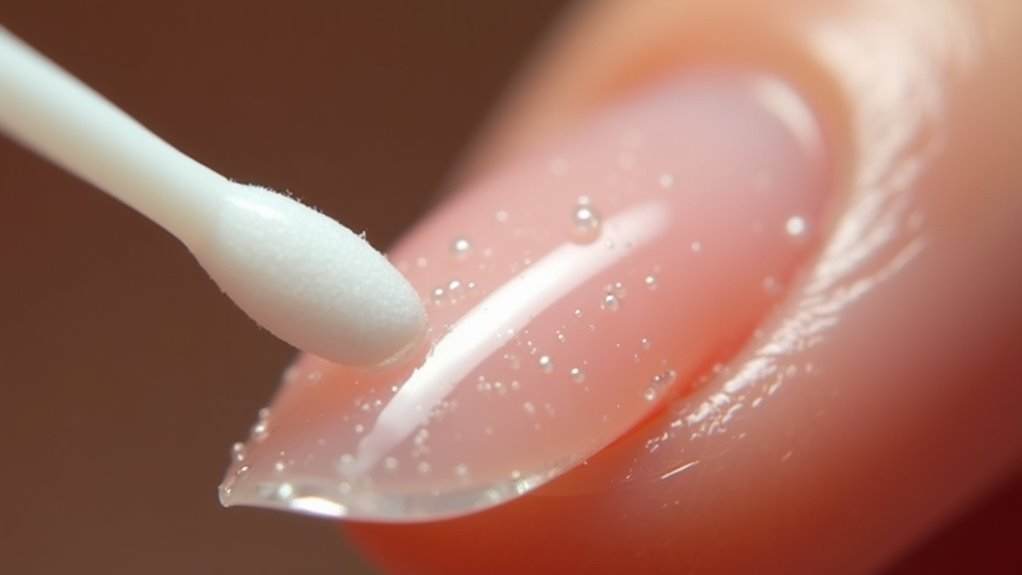
- Apply a small amount of tea tree oil under nails if you notice early signs of infection, as this natural antiseptic can help prevent fungal development.
- Maintain a regular cleaning schedule, ideally cleaning under fake nails daily to prevent buildup that becomes more difficult to remove over time.
Things to Avoid When Cleaning Under fake nails
When cleaning beneath fake nails, it’s essential to employ careful techniques that maintain both the integrity of the artificial enhancement and the health of your natural nail.
Improper cleaning methods can’t only compromise the appearance of your manicure but potentially lead to more serious issues like infections or permanent damage to your nail bed.
Understanding what practices to avoid is just as important as knowing the proper cleaning techniques.
- Applying excessive pressure: Scrubbing too hard can cause the acrylic to separate from your natural nail, creating gaps where bacteria and moisture can accumulate.
- Using cuticle pushers between nail and skin: This aggressive technique can damage the sensitive skin around the nail, creating entryways for bacteria and potential infections.
- Cleaning with harsh chemicals like acetone: These solvents weaken the adhesive bond of fake nails and dry out the natural nail underneath, leading to brittleness and potential breakage.
- Pulling or peeling to remove dirt: This can strip layers from your natural nail, causing thinning, weakness, and increased susceptibility to breakage.
- Excessive hand washing: While cleanliness is important, too much exposure to water and soap can loosen fake nails and create the perfect environment for fungus and bacteria to thrive underneath.
Steps
Proper cleaning under fake nails is essential for maintaining hygiene and preventing infections.
Dirt, debris, and moisture can accumulate under acrylic nails, creating the perfect environment for bacteria and fungi to thrive.
Regular cleaning not only keeps your nails looking beautiful but also protects your natural nails from potential damage and infection.
Step 1: Fill a small bowl with warm water and add a few drops of mild soap or antibacterial hand wash.
Step 2: Dip a soft-bristled nail brush into the soapy water.
Step 3: Gently scrub under each fake nail, using back-and-forth motions to dislodge dirt and debris.
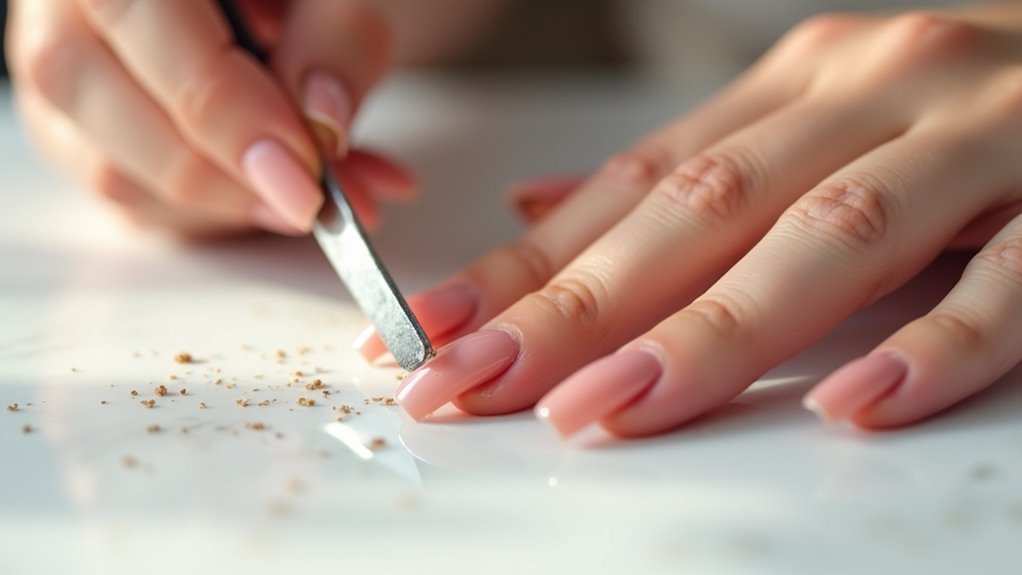
Step 4: Use a cuticle pusher or orangewood stick to carefully scrape out any remaining dirt, avoiding contact with the skin.
Step 5: Rinse your nails thoroughly with clean water to remove soap residue.
Step 6: Dry your nails completely with a soft towel, paying special attention to the area under the fake nails.
Step 7: Inspect your nails for any signs of discoloration or dark streaks that might indicate a fungal infection.
Step 8: Apply tea tree oil or an over-the-counter fungal cream if you notice signs of infection, treating the area once or twice daily until the infection clears.
Final Thoughts
Although cleaning under fake nails might seem tedious, it’s an essential habit that we can’t afford to overlook.
Regular inspection and proper hygiene are your best defenses against infections.
We’ve found that combining daily cleaning with moisturizing greatly extends the life of your acrylics.
##
Maintaining clean fake nails isn’t just about aesthetics—it’s essential for your health.
Regular cleaning with a soft-bristled brush and warm, soapy water, followed by careful scraping with a cuticle pusher, keeps dirt and bacteria at bay. Additionally, regular cleaning of your nails helps prevent bacteria buildup and potential infections, ensuring your nails remain healthy.
Always remember to thoroughly dry your nails to prevent fungal growth and potential separation of your acrylics.
If you notice any signs of infection, don’t panic.
Tea tree oil treatments can effectively address fungal issues without compromising your beautiful nail extensions.
By implementing these simple cleaning techniques into your daily routine, you’ll enjoy gorgeous, healthy fake nails for longer.
Take care of your nails today, and they’ll continue to enhance your style tomorrow. Your hands deserve this attention—make nail hygiene a non-negotiable part of your self-care ritual.