Expensive doesn’t always mean better, and cheap isn’t always disappointing. We sifted through dozens of models to find powerful vacuums that won’t break the bank. We’ll compare five top picks — from lightweight canisters to cordless sticks — and the features that matter most, so you can choose with confidence.
Eureka WhirlWind Lightweight Bagless Canister Vacuum
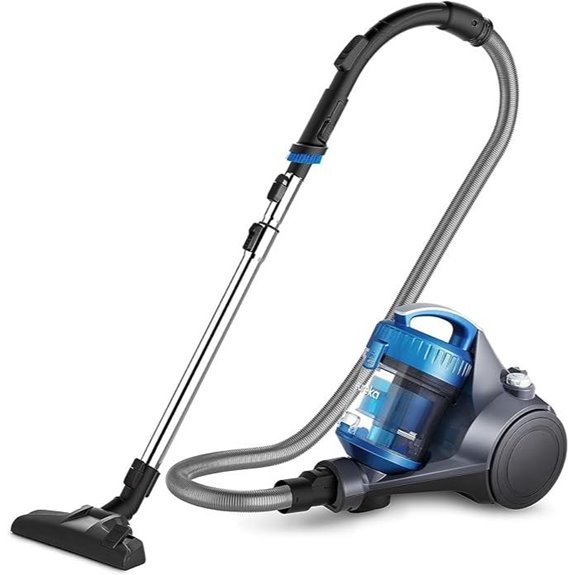
If we need an affordable canister that’s easy to handle, the Eureka WhirlWind is built for small homes and seniors who value lightweight maneuverability and low upkeep. We appreciate its 8.15-pound frame, swivel steering and telescoping metal wand that glide around furniture and stairs. The 960-watt motor delivers solid suction on carpets, upholstery and hard floors, and onboard airflow control on the handle switches settings fast. Bagless 2.5L dust cup, washable filters and automatic cord rewind cut recurring costs and fuss. The integrated 2-in-1 crevice tool and one-button release make cleaning and emptying straightforward. You’ll get reliable value daily.
Bissell CleanView Compact Upright Vacuum 3508
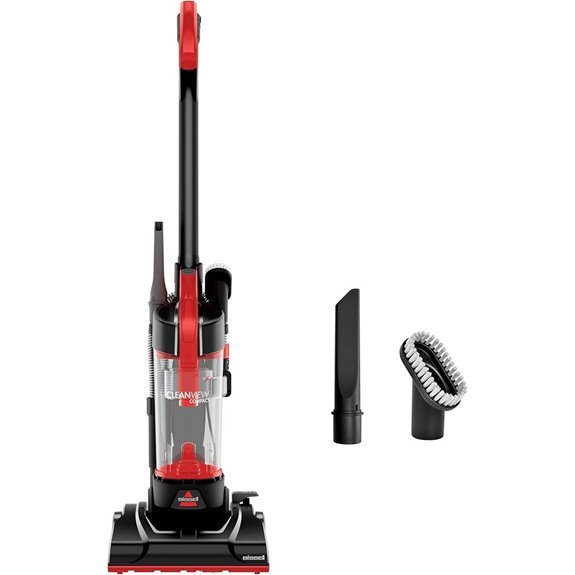
Who needs the Bissell CleanView Compact Upright 3508? We do if we live in dorms or small apartments and want powerful suction in a lightweight package. At under 8 pounds, it’s easy to carry and maneuver. Scatter-free technology keeps hard floors tidy, and the removable extension wand adds versatility for edges and upholstery. The easy-to-empty dirt container uses a push-button disposal for hygienic cleanup. Each purchase supports the BISSELL Pet Foundation, reflecting the brand’s sustainability and pet-welfare commitment. For quick cleanups and routine maintenance, this compact upright delivers efficient, hassle-free performance. It’s priced for budget-conscious shoppers seeking reliable cleaning.
Amazon Basics Upright Bagless Vacuum Cleaner (Black/White)
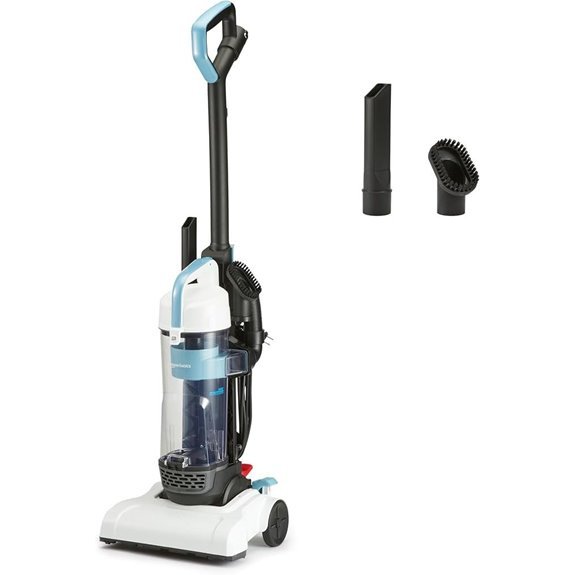
We recommend the Amazon Basics Upright Bagless Vacuum Cleaner for renters and small households who want a lightweight, powerful option. It weighs 8.4 lbs, features a detachable handle and 25‑ft cord, and holds 1.7L of debris for longer sessions. Powered by a 720W motor delivering about 12kPa suction, it tackles carpets and hardwood efficiently. Included crevice and upholstery tools plus a washable filter simplify maintenance, and the quick-release dust cup empties fast. Its 82 dB noise level and single-speed control keep operation straightforward, and user ratings average 4.3/5 from nearly 2,800 reviewers. We think it’s a strong everyday pick.
Dirt Devil Endura Lite Upright Bagless Vacuum Cleaner
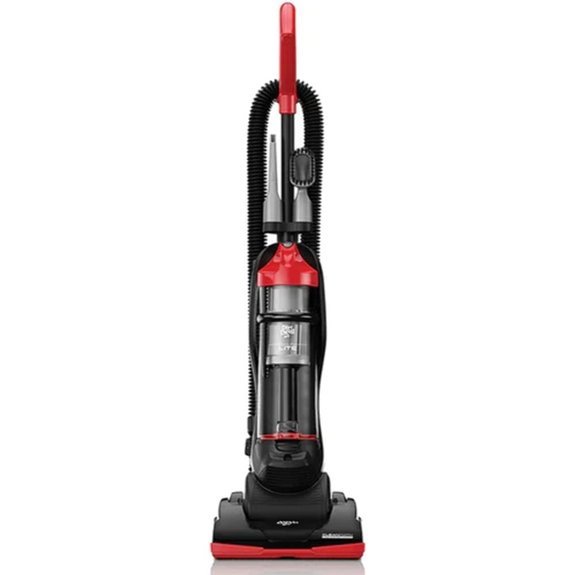
A lightweight, budget-friendly upright with strong Endura suction, the Endura Lite is ideal for renters and small households that want powerful cleaning without bulky equipment. We find its Endura filtration keeps suction steady on carpets and hard floors, so it handles everyday messes reliably. The compact, lightweight build and multi-floor brush roll make maneuvering effortless. A quick-release extension wand gives six feet of reach for high spots, while onboard tools tackle corners and crevices. Maintenance is simple: a one-touch dirt cup and rinsable filter cut down waste and upkeep. Overall, it’s a practical, affordable option for daily household use.
Cordless Stick Vacuum Cleaner with Charging Station
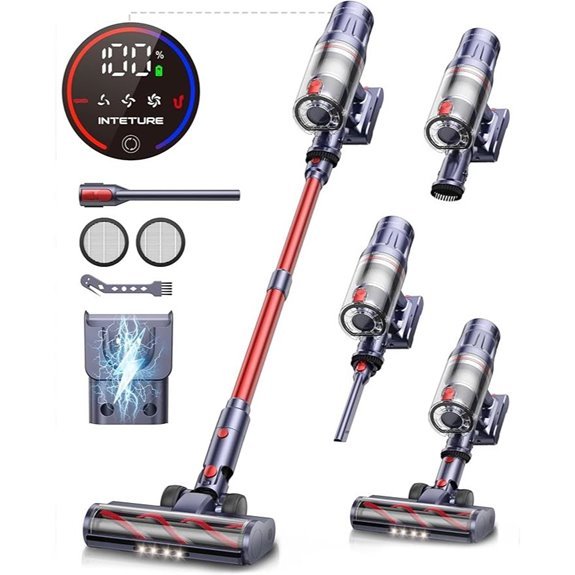
For busy households with pets and mixed flooring, the BP20 cordless stick with charging station delivers the suction and runtime they need. We appreciate its 600W motor and 50KPA suction that tackles dust, pet hair, and embedded dirt across carpets, hardwood, and upholstery. Eight high-capacity batteries give up to 65 minutes in Eco, ~25–30 minutes in Mid, and 15–20 minutes in Max for deep cleans. The wall-mounted, self-standing design saves space; a tangle-free floor brush with soft and hard bristles adapts to surfaces. Accessories convert to handheld or stick, and online setup plus a 3-year warranty ensures support too.
Factors to Consider When Choosing Budget Vacuum Cleaners
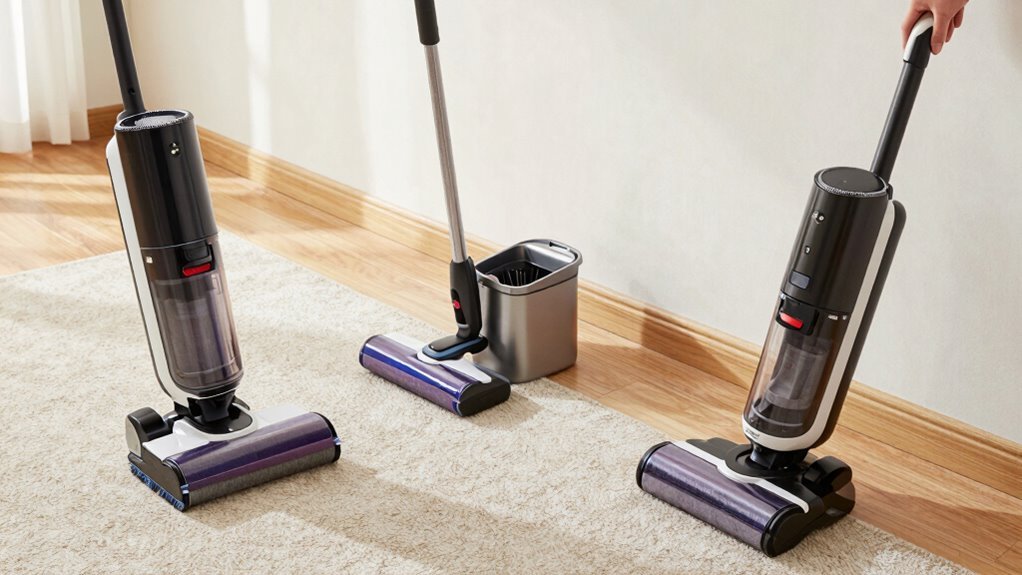
Let’s look at the key factors that help us pick a budget vacuum that actually works for our home. We’ll compare suction power, filtration and allergen control, bagged versus bagless designs, and weight and maneuverability. We’ll also check the attachments and tools included, since they determine how well a vacuum handles different surfaces and tight spots.
Suction Power
Because suction power — measured in watts or kilopascals (kPa) — determines how effectively a vacuum lifts dirt, we should make it a top consideration when buying a budget model. Higher suction generally yields more thorough cleaning on carpets and textured surfaces, so we should prioritize models with stronger ratings for homes with rugs or heavy foot traffic. Adequate suction helps remove embedded dirt, pet hair, and surface debris across flooring types, reducing the need for repeated passes that waste time. We also want machines that sustain suction during use; consistent performance prevents power loss from common issues like brush roll obstructions. In short, pick a budget vacuum with solid, lasting suction, and you’ll get faster, more reliable results without overspending and save money.
Filtration and Allergens
Strong suction won’t help much if the vacuum blows fine dust back into the room, so we should pair power with effective filtration and airflow sealing. We recommend models with multi-stage filtration and a true HEPA option; HEPA traps 99.97% of particles down to 0.3 microns, which dramatically reduces airborne allergens. Washable pre-filters cut costs and catch larger debris before HEPA stages, but we must keep them clean. A well-sealed chassis prevents leaks that let dust escape around seals or motor housings. For allergy sufferers, those combined features matter more than raw wattage. Finally, we need to follow the manufacturer’s maintenance schedule — replacing and washing filters as instructed preserves suction, maintains allergen capture, and extends the vacuum’s effective life. Check seals periodically too.
Bagged Vs Bagless
When choosing between bagged and bagless vacuums, we should weigh upfront and ongoing costs, ease of disposal, and allergy containment. Bagless models remove the recurring expense of replacement bags, so they’re more budget-friendly over time and often have one-touch dustbins that make emptying quicker and less messy. However, they do need regular filter washing to keep suction strong, which is a maintenance trade-off. Bagged vacuums tend to hold larger debris volumes and offer superior containment when replacing full bags, reducing dust escape — a clear advantage for allergy sufferers or sensitive households. In short, if ongoing cost and fast emptying matter most, bagless wins; if containment and minimal dust exposure are priorities, we’d lean toward bagged models. Either way, choose based on household needs.
Weight and Maneuverability
Although suction and attachments matter, weight and maneuverability determine how comfortably we’ll use a vacuum day to day: models under about 8.5 pounds are far easier to carry up stairs and lift around furniture, swivel steering lets us make smooth turns in tight spots, telescoping wands adapt reach and angles for different tasks, and compact, slim designs simplify storage in small homes—together these features cut user fatigue and make routine cleaning less of a chore. When we’re comparing budget models, prioritize lightweight bodies and low centers of gravity for stability, test swivel action for responsiveness, and check wand adjustability for cleaning high shelves or under low furniture. Better maneuverability means quicker, less tiring cleanups and more consistent results across our home every single time.
Attachments and Tools
Because attachments expand a vacuum’s usefulness, we should check which tools come in the box and how they’re stored for quick access. We look for essential pieces — crevice tools, upholstery nozzles, and dusting brushes — that let us tackle corners, furniture, and delicate surfaces. Integrated onboard storage or dedicated docking keeps tools handy during quick touch-ups. We confirm compatibility across carpets, hard floors, and upholstered items so one vacuum handles the whole home. Lightweight, ergonomic tools reduce wrist strain and keep longer sessions comfortable. Multi-function heads that combine dusting and crevice features add versatility without extra bulk. Prioritizing these attachment qualities helps us choose a budget model that cleans thoroughly without compromising convenience or user comfort. It’s smart to test tools before buying.
Maintenance and Costs
A few smart choices about filters, dustbins, and build quality will keep running costs down and make a budget vacuum truly economical. We should factor in replacement filters, bags, and other consumables; washable filters cut those ongoing expenses. Bigger dustbins reduce emptying frequency and save time. Prioritize durable motors, seals, and brush bars so we avoid repeated repairs or replacements. Look for easy-access parts and straightforward maintenance procedures to lower service costs—simple latches and tool-free access matter. Don’t forget energy use: higher efficiency models trim electricity bills over years. When comparing models, add projected consumable costs and expected lifespan to upfront price so we pick the best long-term value. With that approach, we keep total ownership costs low without sacrificing performance and lasting savings.