Transmission fluid is important for cars, but it’s a real headache when it spills on concrete. Most of us know the feeling – seeing that slippery red liquid spreading across the garage floor, which could leave an ugly mark forever if not cleaned properly. While you might want to grab your pressure washer right away, that’s not the best first step. Using the right cleaning method is key to removing the stain completely instead of being stuck with a mark that won’t go away.
Some of the links in this article may be affiliate links. If you make a purchase through these links, we may earn a small commission at no extra cost to you. Thank you.
According to Bob Villa, a home improvement expert, “Transmission fluid and other automotive fluids can quickly penetrate concrete if not cleaned up immediately, making the stain removal process much more difficult.” [quote attribution: www.bobvilla.com/articles/how-to-clean-transmission-fluid]
Transmission Fluid Stains Persist
Why do transmission fluid stains seem to laugh at our cleaning efforts?
It’s because they’re incredibly stubborn, especially older ones that have had time to embed deeply into concrete’s porous surface.
We’ve found that multiple applications of absorbents like kitty litter are often needed.
Sometimes, even after scrubbing with bleach or specialized enzyme products, some stains simply refuse to disappear completely. Effective cleaning requires specialized products and techniques to tackle these persistent stains.
##
We’ll need to tackle transmission fluid on concrete differently than on gravel.
For concrete surfaces, you’ll want to use absorbent materials like cat litter first, followed by a degreaser specifically designed for concrete (I think Dawn dish soap works in a pinch too). Regular maintenance of oil tank filters can help prevent similar stains from occurring in the future.
Remember to avoid pressure washing initially as this might spread the stain, and never use bleach as it won’t break down the oil-based fluid.
Things to Do When Cleaning Transmission fluid off concrete
Cleaning transmission fluid from concrete requires quick action and the right approach to prevent permanent staining.
Transmission fluid is particularly stubborn because of its dark red color and slick consistency, which can deeply penetrate concrete’s porous surface if left untreated.
Addressing these spills promptly using proper absorbents and cleaners helps achieve complete removal before the fluid has time to set into the concrete.
- Use cat litter as first response: Apply non-clumping cat litter about 3/8 inch thick over the stain, grind it in with shoes or a 2×4, and let it sit until it absorbs the fluid.
- Apply household detergents: Work laundry or dishwasher detergent into the stained area with water and a broom, letting it sit for 30 minutes before rinsing.
- Try bleach for stubborn stains: Scrub persistent stains with bleach using a deck brush, then hose off immediately to prevent concrete damage.
- Consider oil dry products: Apply a thick layer directly onto spills, allowing complete absorption before sweeping away contaminated material.
- Treat like an oil stain initially: Cover fresh spills with absorbent materials like sawdust or newspapers to lift the fluid before applying deeper cleaning methods.
- Use pressure washing as final step: After chemical treatments, use a pressure washer at low to moderate settings to avoid damaging the concrete surface.
Things to Avoid When Cleaning Transmission fluid off concrete
When cleaning transmission fluid from concrete, it’s crucial to avoid certain common mistakes that can worsen the stain or damage the surface.
Many homeowners inadvertently make the situation worse by using improper methods or materials in their rush to clean up the spill.
Understanding what not to do is just as important as knowing the correct cleaning techniques.
Clumping cat litter – This popular household item is ineffective for transmission fluid spills as it fails to properly absorb the fluid and often leaves behind residue that can make the stain worse.
High-pressure washing – While it might seem like a powerful solution, pressure washing can actually drive the transmission fluid deeper into the concrete’s porous surface and potentially cause erosion damage.
Bleach as a first resort – Using harsh chemicals like bleach before trying gentler cleaning methods can discolor concrete and weaken its structural integrity without effectively removing the transmission fluid.
Rushing the absorption process – Removing absorbent materials like kitty litter or oil dry too quickly prevents them from fully extracting the transmission fluid, leaving behind stubborn stains that become harder to remove over time.
Flammable solvents near heat sources – Cleaning agents like lacquer thinner can be effective but create serious fire hazards if used near open flames, as transmission fluid is combustible and can easily ignite.
Steps
Transmission fluid stains on concrete can be particularly stubborn due to their slick, oily nature and deep penetration into the porous surface.
Unlike some other automotive fluids, transmission fluid has a distinct reddish color that can permanently discolor concrete if not addressed promptly.
Fortunately, with the right materials and technique, even set-in transmission fluid stains can be effectively removed from your garage floor, driveway, or other concrete surfaces.
Steps
Step 1: Spread a 3/8-inch thick layer of cheap, non-clumping kitty litter over the entire stain, ensuring complete coverage.
Step 2: Grind the kitty litter into the concrete using a 2×4 or by walking over it with hard-soled shoes to help it absorb the transmission fluid.
Step 3: Allow the kitty litter to sit for several hours, or preferably overnight, then sweep or vacuum it up completely.
Step 4: Sprinkle laundry detergent or trisodium phosphate (TSP) over the stain area, then lightly spray with water.
Step 5: Scrub the detergent into the stain vigorously using a stiff-bristled broom to break down remaining residues.
Step 6: Let the cleaning solution sit for at least 30 minutes to work on the stain.
Step 7: Rinse thoroughly with a garden hose, removing all detergent and loosened fluid.
Step 8: For persistent stains, apply brake parts cleaner or a solution of bleach and water, then scrub with a deck brush.
Step 9: Rinse again or use a pressure washer at a low to moderate setting to avoid damaging the concrete.
Step 10: For extremely stubborn stains, apply a specialized concrete cleaner like Oil Eater or Bacrete enzyme powder according to package directions and let sit overnight before final scrubbing and rinsing.
Final Thoughts
Despite your best efforts, removing transmission fluid from concrete isn’t always completely successful.
We’ve found that older concrete surfaces often retain some discoloration even after multiple treatments.
If you’ve tried several applications of cat litter and scrubbing but still see stains, it might be time to accept them as part of your concrete’s character.
##
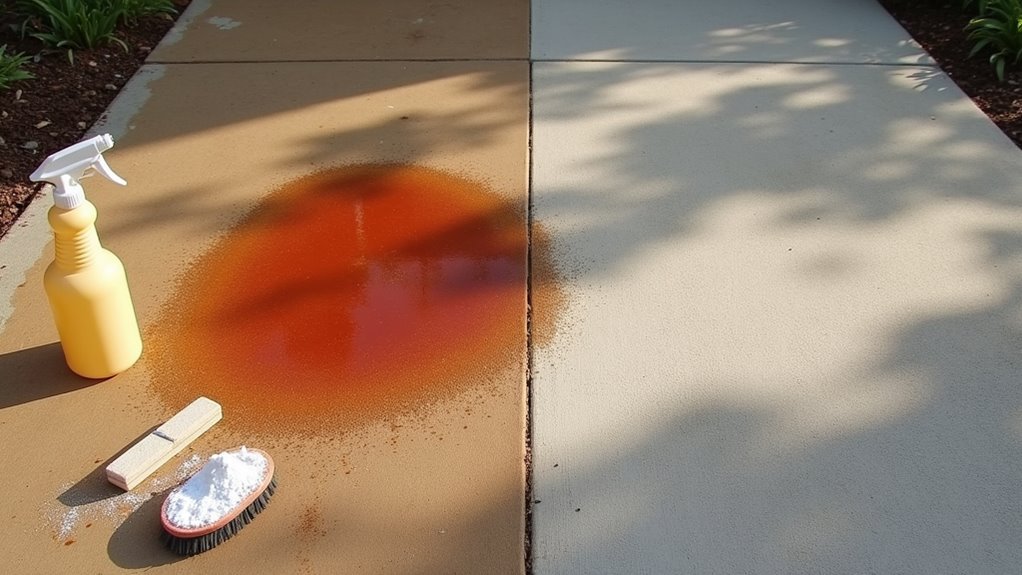
Transmission fluid stains on concrete may seem like a permanent eyesore, but with the right approach, you can effectively restore your concrete’s appearance.
The combination of absorbent materials like cat litter or oil dry, along with degreasers such as Dawn dish soap, provides a powerful two-pronged attack against these stubborn stains.
For particularly resistant spots, stronger solvents like brake cleaner or acetone can break down the remaining residue.
Remember that patience is key in this process.
Multiple applications may be necessary, especially for older or deeply penetrated stains.
Finishing with a pressure washer at a moderate setting can help restore your concrete to its former glory.
Don’t let that transmission fluid stain defeat you!
Take action today with these proven methods, and you’ll soon have a cleaner driveway or garage floor that you can be proud of.
The sooner you address the spill, the easier it will be to remove completely, so gather your supplies and reclaim your concrete.
Additionally, regular monitoring of your concrete surfaces can help you catch spills early and prevent staining.